You work in a fast-paced food environment where accuracy and hygiene matter every shift.
As a Subway Sandwich Artist, your main focus is food safety and proper preparation from the moment ingredients are handled.
This guide explains the core safety standards and daily prep tasks you must follow to perform the role correctly.
Core Responsibilities of a Sandwich Artist
The role requires focus, consistency, and attention to safety. Daily tasks support both customer service and food quality standards.
- Greet customers and take accurate orders. Listen carefully, confirm choices, and repeat orders when needed to avoid mistakes.
- Assemble sandwiches using standard procedures. Follow portion rules and build items in the correct sequence for consistency.
- Maintain portion control. Measure meats, cheeses, and vegetables properly to meet guidelines and reduce waste.
- Follow food safety practices. Wash hands regularly, change gloves as required, and prevent cross-contamination.
- Handle payments and operate the register. Process transactions accurately and provide correct change.
- Restock ingredient containers. Monitor supply levels and refill items before shortages occur.
- Keep the prep area clean and sanitized. Wipe surfaces, clean utensils, and maintain a safe workstation.
Food Safety Requirements
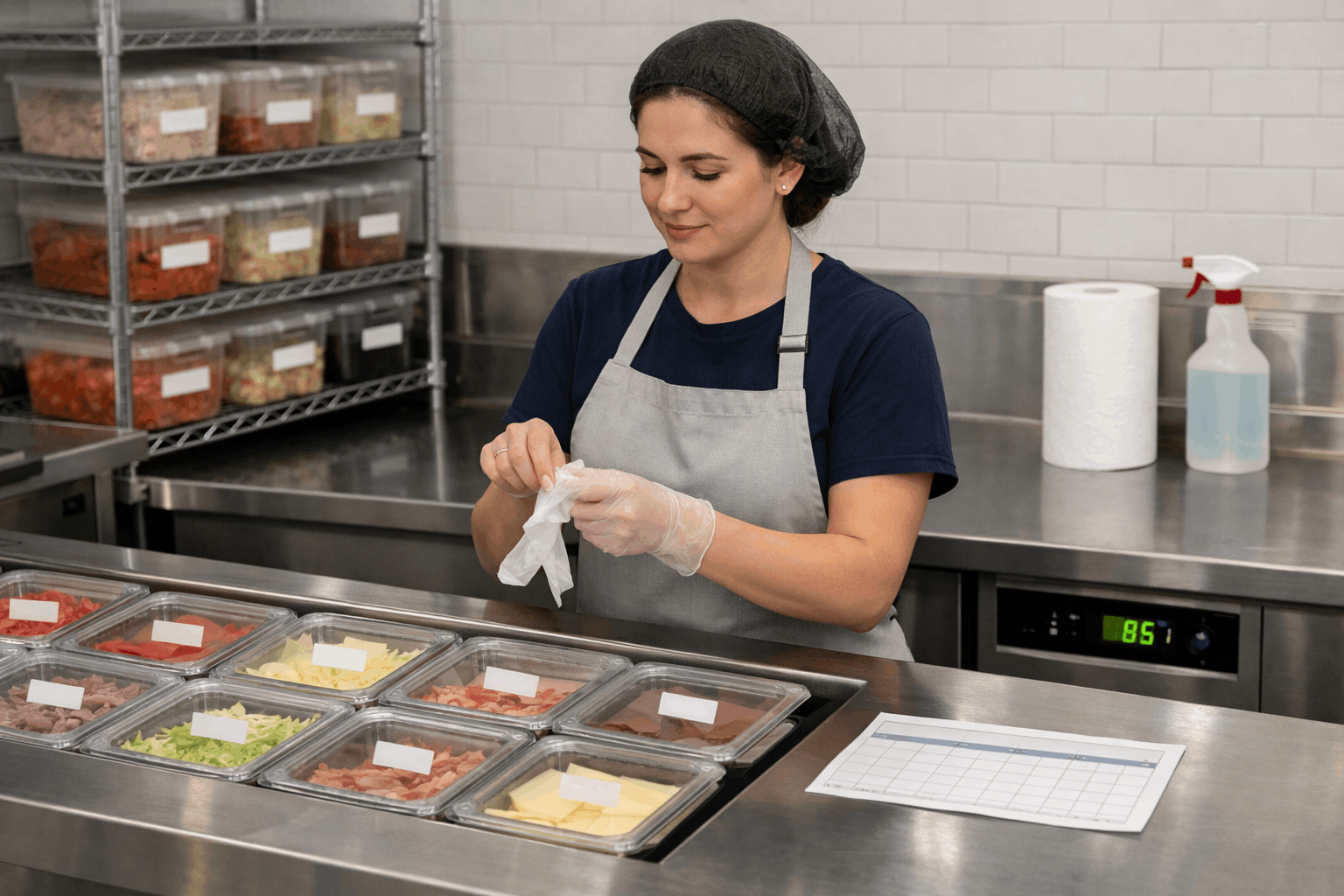
Food safety is a core part of daily operations. Every shift must follow strict hygiene and handling standards to protect customers and maintain compliance.
- Maintain personal hygiene. Follow proper handwashing procedures, wear clean uniforms, and use hair restraints at all times.
- Use gloves correctly. Change gloves between tasks and after handling different food items to prevent cross-contamination.
- Control food temperatures. Keep cold items properly refrigerated and ensure hot items remain within safe holding ranges.
- Label and rotate ingredients. Apply date labels and follow FIFO methods to maintain freshness.
- Prevent cross-contamination. Separate raw and ready-to-eat ingredients and sanitize surfaces between uses.
- Clean and sanitize equipment. Disinfect prep tables, knives, cutting boards, and storage containers regularly.
- Monitor food quality. Discard expired or unsafe products immediately to maintain safety standards.
Daily Food Preparation Tasks
Preparation tasks ensure smooth service throughout the day. Consistency and timing are essential to maintain product quality.
- Prepare vegetables and proteins. Wash, slice, and portion ingredients according to standard guidelines.
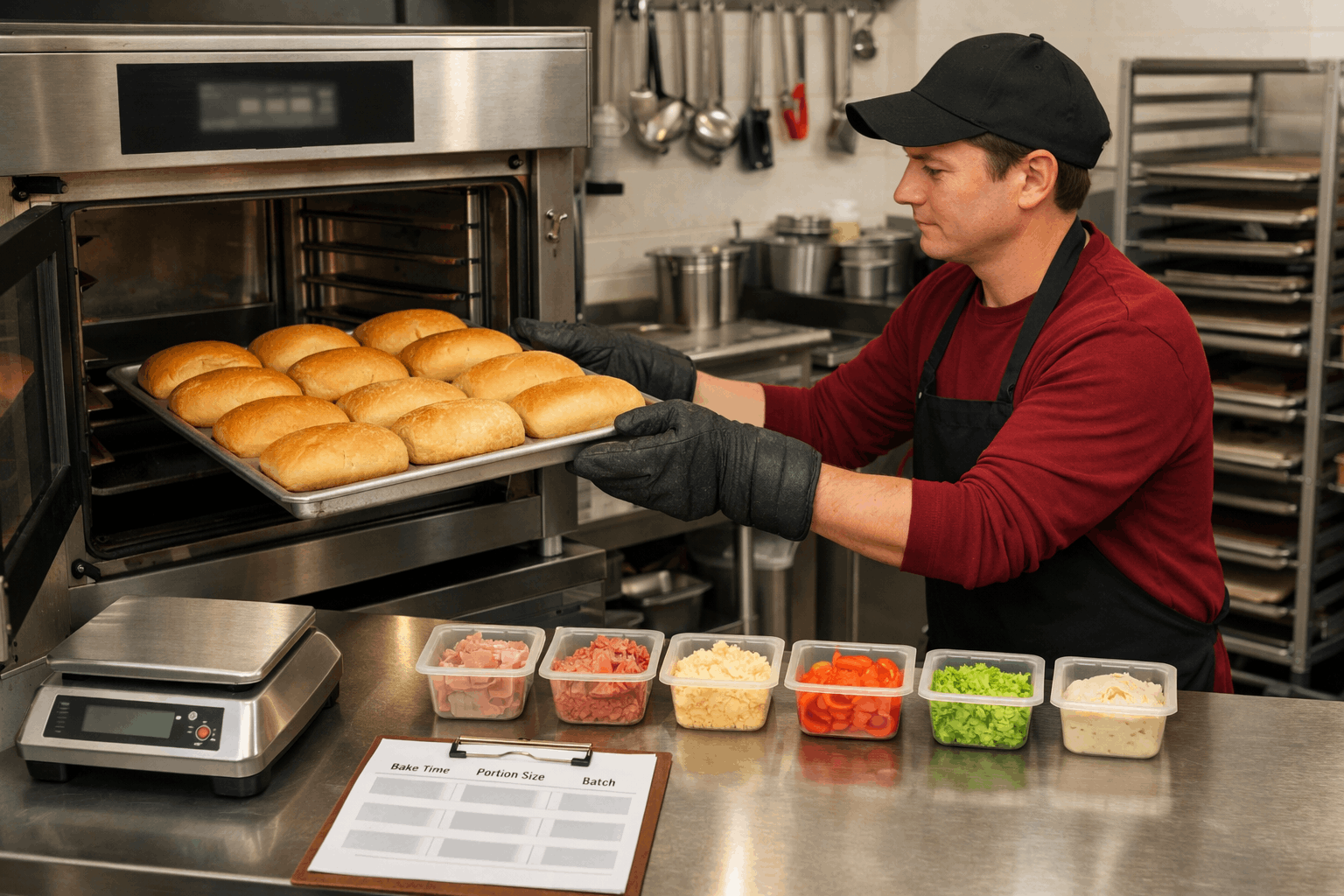
- Bake bread on schedule. Follow baking procedures and monitor oven times carefully.
- Refill ingredient containers. Keep the service line stocked during peak hours.
- Portion ingredients accurately. Measure meats, cheeses, and toppings to maintain consistency.
- Label prepped items. Apply date stickers and follow rotation procedures.
- Maintain prep area cleanliness. Sanitize surfaces and organize tools between tasks.
- Check inventory levels. Monitor supplies and report low stock when necessary.
Equipment Handling and Safety
Safe equipment use prevents injuries and protects food quality. Proper handling also supports smooth daily operations.
- Use knives safely. Follow correct cutting techniques and store blades properly after use.
- Operate ovens and toasters correctly. Monitor cooking times and avoid overheating products.
- Handle refrigeration units properly. Keep doors closed, and check temperature displays regularly.
- Use slicers with caution. Follow safety guards and cleaning procedures after each use.
- Disconnect equipment before cleaning. Turn off and unplug machines when required to prevent accidents.
- Report equipment issues immediately. Notify supervisors if tools malfunction or show damage.
Opening and Closing Duties
Opening and closing tasks maintain structure and accountability. Each shift begins and ends with specific operational checks.
- Prepare the service line before opening. Set up ingredients, check temperatures, and ensure full stock.
- Verify cleanliness standards. Inspect prep tables, utensils, and equipment before service starts.
- Count and record inventory. Review stock levels and note any shortages.
- Clean and sanitize all stations at closing. Disinfect surfaces, tools, and food containers.
- Store ingredients properly. Seal, label, and refrigerate items according to guidelines.
- Secure the equipment and register. Turn off appliances and complete end-of-day cash procedures.
Skills Needed for Success
Strong performance depends on both technical and personal skills. Consistency, focus, and teamwork improve daily results.
- Attention to detail. Follow portion sizes, safety rules, and order accuracy without errors.
- Time management. Handle multiple tasks efficiently during busy periods.
- Communication skills. Speak clearly with customers and coordinate smoothly with team members.
- Reliability and punctuality. Arrive on time and complete assigned duties responsibly.
- Ability to multitask. Manage food preparation, service, and cleaning tasks in a single shift.
- Physical stamina. Stand for long periods and maintain energy throughout the shift.
Training and Compliance Standards
Training ensures consistent service and safety. Compliance protects both customers and the business.
- Complete initial onboarding training. Learn food safety rules, prep procedures, and service standards.
- Follow health code regulations. Comply with local food handling and sanitation laws.
- Participate in ongoing training. Attend refresher sessions to stay up to date.
- Document safety checks. Record temperature logs and cleaning schedules accurately.
- Adhere to company policies. Follow operational guidelines and workplace conduct standards.
- Pass required certifications. Obtain food handler permits or safety certifications when required.
Inventory Control and Waste Management
Inventory control protects profit and product quality. Proper tracking reduces unnecessary waste.
- Monitor ingredient usage. Track daily consumption to avoid shortages or excess stock.
- Follow FIFO rotation. Use older stock first to maintain freshness.
- Record waste accurately. Log discarded items and identify patterns.
- Store supplies correctly. Keep dry goods and refrigerated items organized.
- Report discrepancies. Notify management of missing or damaged stock.
Customer Service Standards
Service quality affects customer satisfaction and repeat visits. Professional conduct supports brand reputation.
- Maintain a positive attitude. Stay polite and respectful during all interactions.
- Handle complaints calmly. Resolve concerns quickly and professionally.
- Confirm order accuracy. Double-check selections before finalizing.
- Maintain a clean presentation. Keep uniform and appearance neat at all times.
- Work efficiently during rush hours. Balance speed with accuracy.
Health and Workplace Safety
Workplace safety protects staff from injuries. Safe habits reduce operational risks.
- Follow slip and fall prevention practices. Clean spills immediately.
- Use proper lifting techniques. Avoid strain when handling heavy supplies.
- Keep walkways clear. Maintain organized storage areas.
- Wear non-slip footwear. Reduce the risk of accidents in wet areas.
- Report hazards promptly. Inform supervisors of unsafe conditions.
Teamwork and Shift Coordination
Coordination improves speed and consistency. Clear communication prevents confusion.
- Support team members during peak hours. Share responsibilities when needed.
- Follow shift assignments. Complete designated tasks efficiently.
- Communicate stock shortages. Alert the team before ingredients run out.
- Assist with cross-training. Learn multiple stations to improve flexibility.
- Maintain respectful workplace behavior. Promote a professional environment.
Performance Evaluation and Advancement
Performance reviews support growth and improvement. Strong results open advancement opportunities.
- Meet quality standards consistently. Maintain accuracy and food safety compliance.
- Demonstrate reliability. Show accountability during all shifts.
- Improve speed and efficiency. Increase productivity without lowering standards.
- Accept feedback constructively. Apply corrections immediately.
- Seek advancement opportunities. Express interest in leadership roles when ready.
Final Takeaway
Food safety, preparation accuracy, and consistent service define the Subway Sandwich Artist role.
Strong performance in daily tasks protects customers and keeps operations running smoothly.
Apply these standards in every shift and prepare yourself to succeed in this position.